
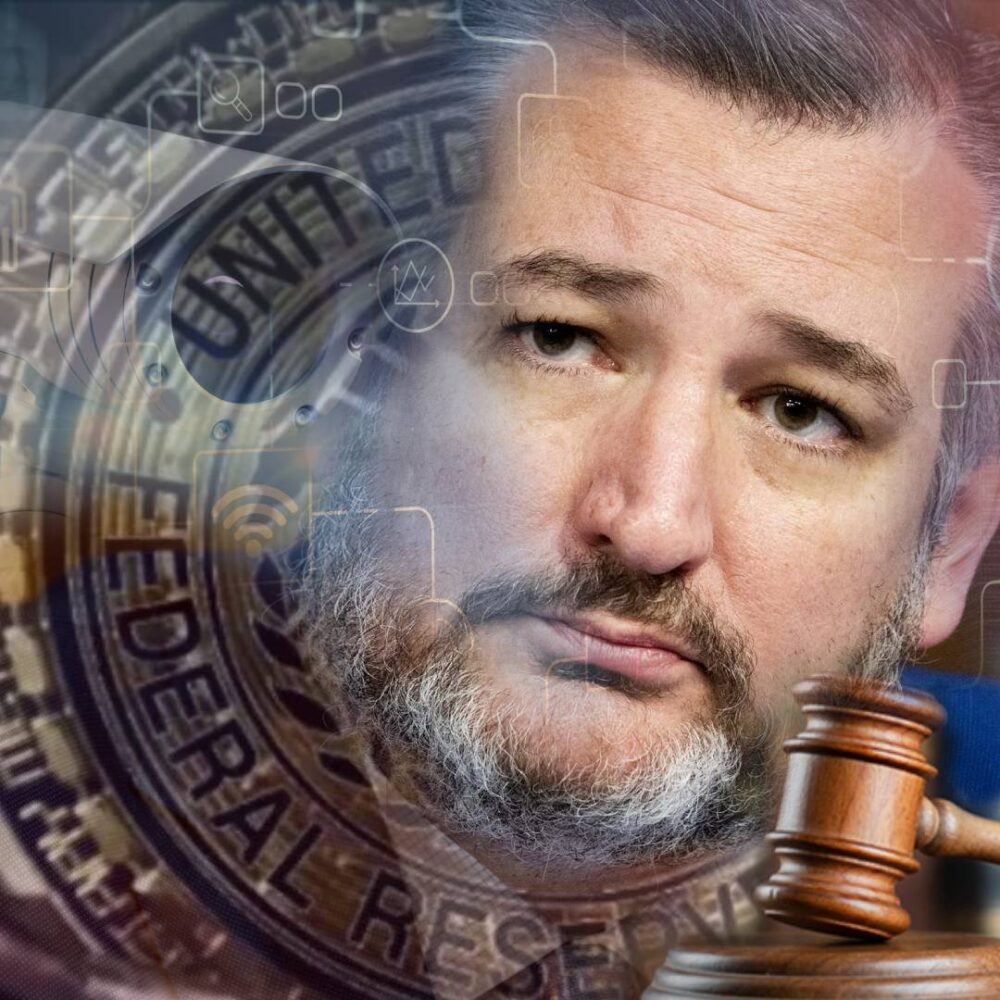
Ted Cruz Introduces Legislation to Prohibit FedCoin and Financial Surveillance
In recent news, Ted Cruz, ranking Member of the Senate Committee on Commerce, Science, and Transportation, introduced legislation to prohibit the Federal Reserve from developing a direct-to-consumer central bank digital currency that could be used as financial surveillance. No one is really talking about this. This includes the digital dollar, or “FedCoin,” which is a proposed form of digital currency that the Federal Reserve would issue. Despite the fact that a Fed dollar is already considered illegal, Cruz and his team believe that introducing a bill is necessary to ensure that this kind of currency never becomes a reality.
Fedcoin is a researched digital currency that is being considered by the Federal Reserve, the central bank of the United States. If implemented, it would be a form of digital currency that would be issued and backed by the Federal Reserve, just like a physical currency. The idea behind Fedcoin is to create a more efficient, secure, and cost-effective way to process payments.
One potential risk of a digital currency like Fedcoin is the potential for financial surveillance. Because Fedcoin transactions would be digital and recorded on a blockchain, it would be possible for the Federal Reserve or other government agencies to monitor and track all transactions in real time. This could lead to a loss of privacy for users, as their financial transactions would be easily traceable.
This type of financial surveillance could significantly affect individual privacy and civil liberties. For example, suppose the government were able to track all financial transactions. In that case, it could use this information to target individuals or groups for surveillance or investigation, even if they have not been accused of wrongdoing.
It is important to note that the extent of financial surveillance with Fedcoin would depend on how the system is designed and implemented. The risk of financial surveillance with Fedcoin is a complex issue that depends on a variety of factors. It is important to carefully consider these factors before implementing any new digital currency system. Americans need to know more about this topic.
The debate around central bank digital currencies, or CBDCs, has been gaining momentum in recent years, particularly as more countries explore the possibility of issuing their own digital currencies. Supporters argue that CBDCs could provide greater financial stability, facilitate cross-border transactions, and reduce the need for physical cash. However, opponents like Cruz argue that CBDCs could pose a threat to individual privacy, facilitate illicit activities, and undermine the role of commercial banks in the financial system.
Cruz’s proposed bill comes at a time when there is a growing concern among some lawmakers about the potential risks of CBDCs. In February of 2021, for example, Representative Rashida Tlaib, a Democrat from Michigan, introduced a bill that would require the Federal Reserve to offer “FedAccounts” to every American, which would allow them to access digital dollars directly. Tlaib’s bill has been praised by some progressives who see it as a way to provide greater financial inclusion and reduce economic inequality. However, others worry that such a system could be vulnerable to cyber attacks or that it could undermine the role of commercial banks in the financial system. Another concern is that people’s accounts can be frozen or stolen easier.
Is Ted Cruz actually trying to squash the development of FedCoin? Or is he just proposing the bill so when it doesn’t happen he can say he tried? The reality is, it should already be illegal to make a FedCoin.
Despite the growing interest in CBDCs, many Americans need to be made aware of the potential implications of such a system. This should be a bigger concern for Americans. A recent survey by the University of Chicago found that only 25% of Americans have heard of CBDC and that even fewer have a good understanding of what they are. This lack of awareness has led some to question whether the current debate over CBDCs is simply a matter of optics or whether it is truly an urgent issue that requires immediate action.
However, Cruz and his team are adamant that a Fed dollar would be illegal and that a bill is necessary to ensure that it never becomes a reality. They argue that FedCoin poses a significant threat to individual privacy.